Audacious Thief


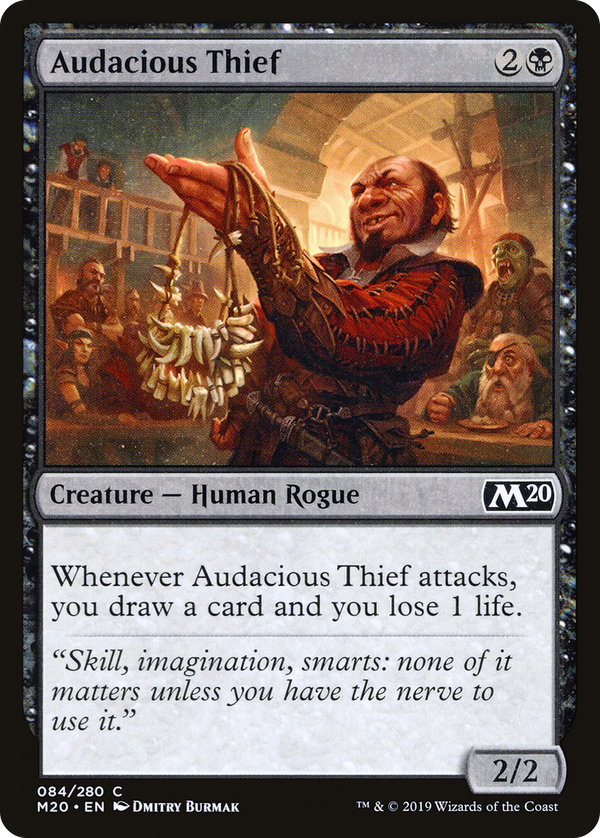
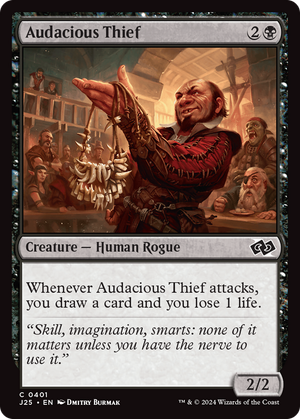
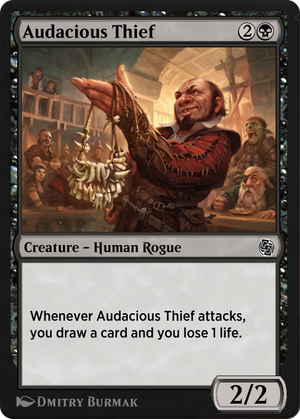
The attack trigger fires the instant this creature is declared as an attacker, so the card is already in hand before blockers come down: the payout is not conditional on surviving combat, only on getting to attack in the first place. That is the tax the whole design runs on. A modest body swings freely into an open board and stalls the moment the ground fills with blockers it cannot profitably attack past. The result is the classic inversion built into every attack-to-draw creature: the engine runs hottest early, when you have the least need for extra cards, and sputters exactly when you are behind and starving for gas. The life loss is the smaller half of the bargain, a slow drip rather than a real deterrent; the combat requirement does the balancing work, keeping the card from ever running away with a game on its own. This is why the "attack, draw a card" template keeps landing on small, expendable bodies rather than on anything worth protecting: the effect is a repeatable advantage bought against combat exposure, and it only stays fair when the body is fragile enough that the board can eventually wall it off. Here the frame is precisely that fragile, which is not a flaw in the design but the point of it.