Arm-Mounted Anchor

The discard clause is where the design lives. A menace-granting Equipment that draws two on connection is old news; what sharpens this one is the tax it attaches to the draw. Connect, draw two, and then the accounting begins: discard two cards, unless one of them is a Pirate, in which case you pay only that single Pirate. Run enough Pirates and the trigger nets you a card and feeds your graveyard a creature worth digging back up; whiff on Pirates and you are rummaging, two deep and two down, churning the library without gaining ground. That gradient is deliberate. It rewards the tribe without gutting a deck that draws into it empty. The equip cost carries the second wrinkle: it drops when you are down to one card or fewer, which quietly aligns the whole Equipment with an empty-hand aggressive posture. Spend your hand to the board, connect, and re-suiting a fresh threat costs less precisely when you have most committed to the attack. Both conditions push the same way: commit everything, hit, refill on your terms, and pay the toll in Pirates rather than raw card advantage. It is a combat-damage engine built for a deck emptying its hand onto the table, not one hoarding answers behind a wall, and the Pirate requirement is the line that separates a payoff from a wash.
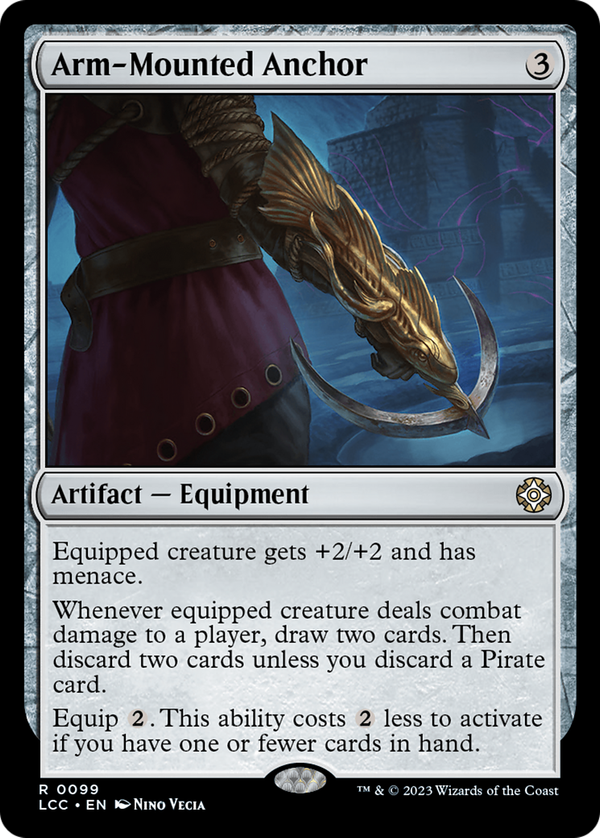
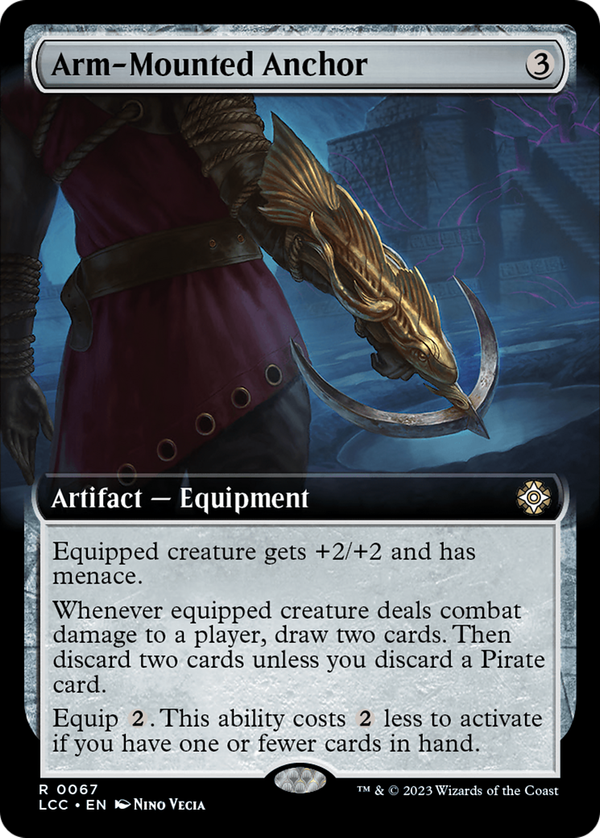
Rules text
 . This ability costs less to activate if you have one or fewer cards in hand.