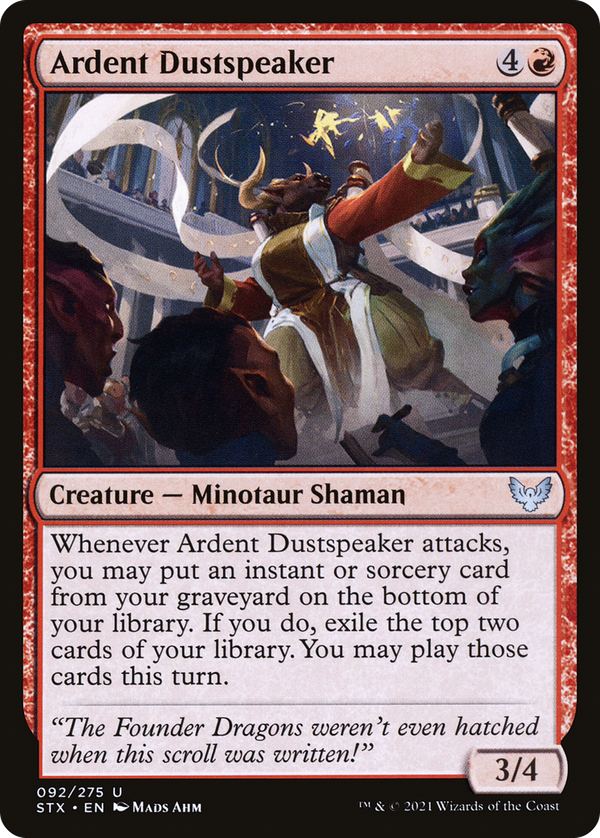
Ardent Dustspeaker


The attack trigger is a rebuy dressed as impulse draw: an instant or sorcery already used goes to the bottom of your library, and in exchange the top two cards get exiled with permission to play them before the turn ends. That structure asks for a shell that fills its own graveyard with cheap spells and keeps mana open to cash in the flip, because the same deck does both jobs. The 3/4 body is the friction it has to work through: a five-mana attacker vulnerable to most removal before it connects twice, with a trigger that fires only on the attack step, so it wants a board the opponent cannot profitably block into. What separates this from a plain card-advantage engine is the play-this-turn clause: the exiled cards evaporate at cleanup and you still owe their mana costs, so the two you turn up are not stockpile, they are cards you cast now or lose. That pushes the deck toward low curves and same-turn payoffs, and it means the ceiling scales with what the exiled cards cost rather than what they are. Flip two you can afford in one window and the turn snowballs; flip two you cannot pay for and you whiffed. The recursion detail matters too: the bottomed spell is not gone, just tucked under the library, so a long game eventually draws it back into range of another swing.