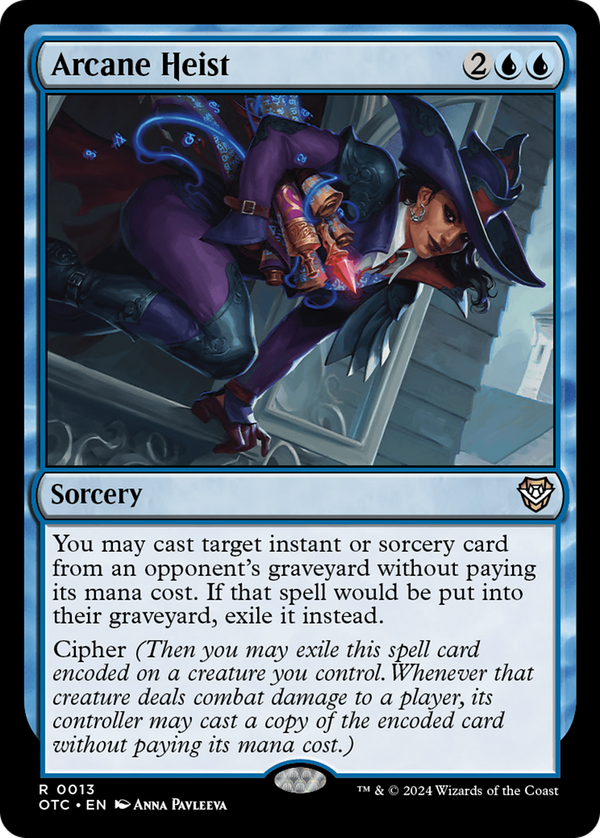
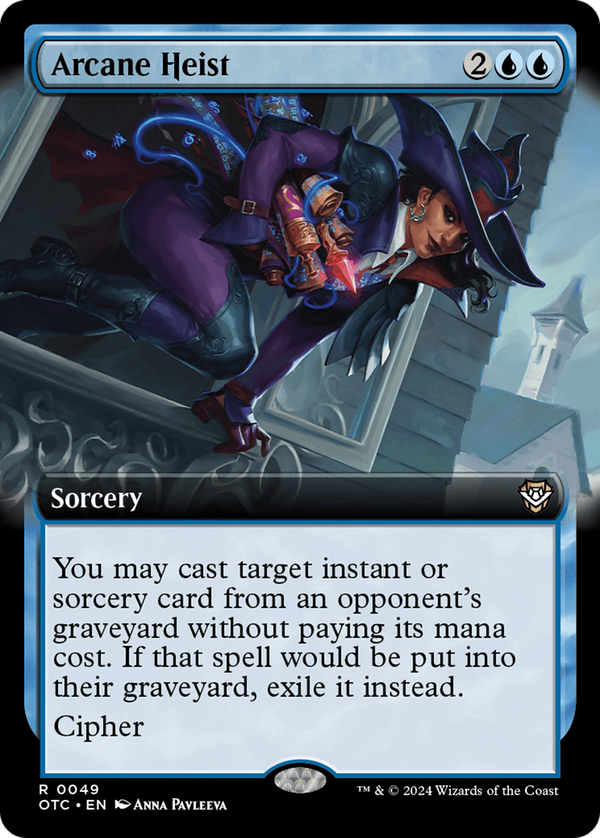
Arcane Heist


Encoding a graveyard-theft spell with cipher creates an engine most versions of the effect never earn: the sorcery casts a stolen instant or sorcery once, then rides an encoded creature into every future combat, and each connection re-casts a copy that reaches back into an opponent's graveyard for a fresh target. That distinction is the whole design. Because the spell exiles what it steals rather than returning it, no single stolen card recurs; instead the copy hunts down a new instant or sorcery on each hit, so the engine is only as good as the pile your opponents keep restocking. It sharpens as the game runs long and opponents spend more removal, ramp, and card draw, and the exile clause quietly shrinks the very yard it feeds on, denying them a second use of everything you lift. The target restriction to instants and sorceries keeps it from becoming a blanket graveyard raid, limiting you to the spells actually worth casting from an opponent's yard in the first place. And the cipher runs in one direction only: the sorcery encodes itself when it first resolves, while the copies the encoded creature produces are never re-encoded and the borrowed spells are never encoded at all. Cipher has always been an odd corner of blue's history, a keyword that rewards connecting in combat over holding an effect in reserve, and this card leans into that friction by pointing the theft at a rotating cast of enemy spells.