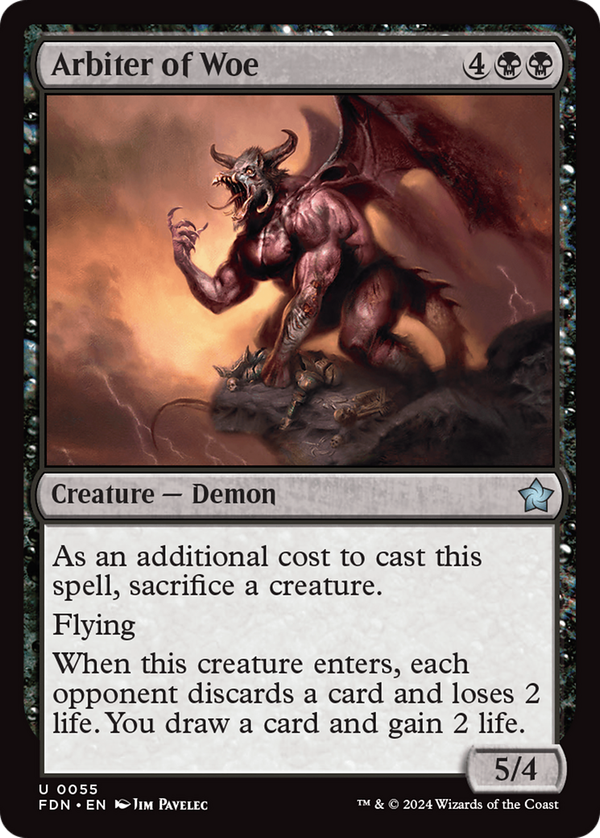
Arbiter of Woe


The additional sacrifice cost is what turns a fair beater into an engine payoff. The 5/4 flyer is a reasonable body on its own, but the drain is priced against a real expense: you have to feed a creature into the casting cost before anything resolves, and that framing is the point of the design. The entry trigger is strictly asymmetrical and stacks four separate edges into one resolution: each opponent discards a card and loses two life while you draw and gain two, which reads like a pile of small advantages rather than one big swing. What makes the sacrifice honest is that it converts a creature you no longer want (a token, a spent attacker, a body already worth more dead than alive) into card advantage, hand disruption, and a life swing in a single cast. This is the aristocrats payoff dressed as a demon: the same effect that punishes a wide, disposable board also lands hardest against a deck with nothing to spare. The lineage runs through black's long tradition of drain-on-arrival demons that demand a body up front, the fatties that ask you to pay in creatures before they pay you back. The distinction here is density: it closes the loop on a sacrifice engine and pushes four resources across the table the moment it lands, all while asking you to already have a graveyard economy worth feeding.