Ao, the Dawn Sky


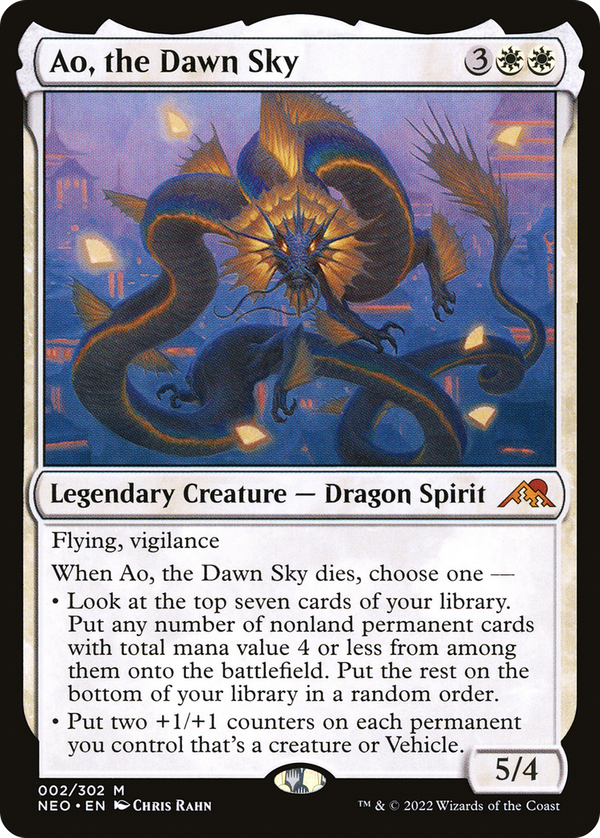
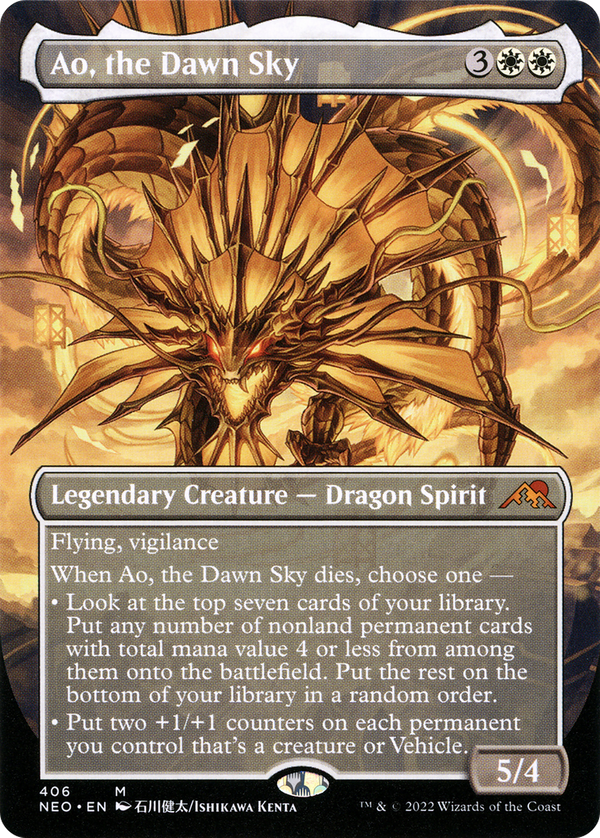
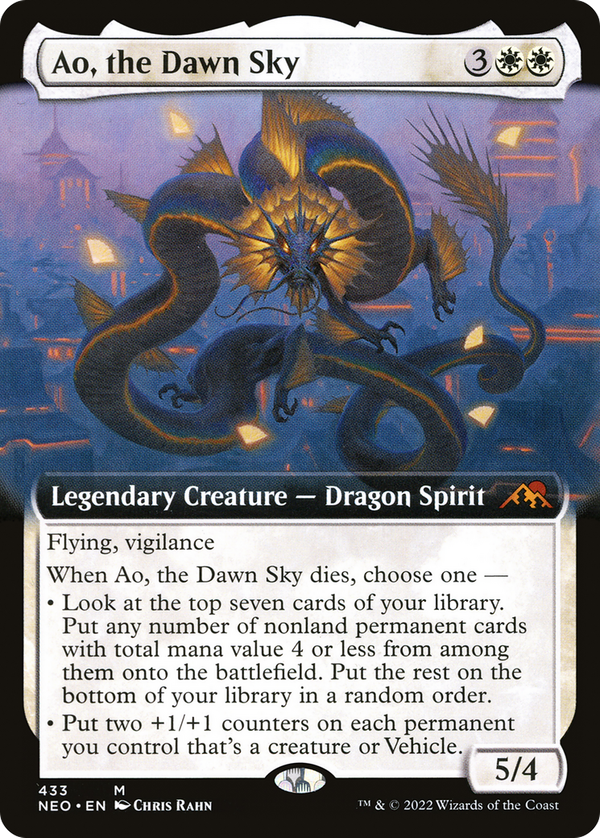
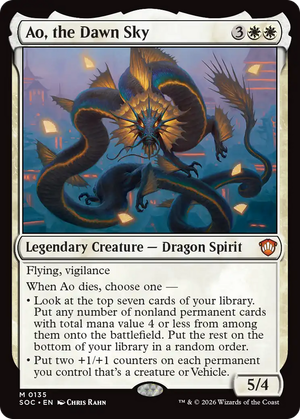
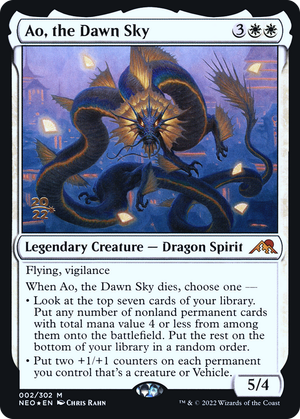
The trick to a good death trigger is making the removal spell that answers it feel bad no matter which way it points, and this splits the difference cleanly: kill it, and the controller either digs out a board's worth of small permanents or anthems the survivors into a lethal swing. Neither mode is a blowout in isolation, which is exactly the design restraint at work. The first mode looks at the top seven cards and drops any number of nonland permanents whose total mana value is four or less, so it repopulates a wide board of cheap threats and utility pieces off the top of the deck rather than cheating out a single bomb; the counter half doubles down on whatever survived, rewarding a board that was already committed. A 5/4 flier with vigilance is a fine threat on its own, attacking without tapping so it stays back to block, but the card's real weight sits in what happens after it trades. That inverts the usual tension around midrange fatties: normally the opponent is happy to trade removal for a five-drop and move on, and here the trade is the point where the card starts paying. Modal death triggers ask the designer to balance two payoffs that only ever fire once, and to make both worth choosing between. This one lands both: the top-of-library refill for the grindy game, the counter spread for the race. The choice is genuine, which is why the death trigger reads as a threat rather than a consolation prize.