Anthropede


When the Room enchantment type arrived, it needed a natural predator, and this is the body built to eat one. The coherent piece of the design is the discard-or-pay clause: destroying a Room is stapled to a reflexive trigger that asks you to spend a resource beyond the creature itself, so the effect is priced as an option rather than free value. That structure matters because Rooms represent real investment, unlocked in halves and left partway opened, and a clean way to blow up an opponent's committed door is a genuine lever. Green has long been Magic's primary color for tearing down enchantments, but it usually does so through a spell that resolves and vanishes; folding the answer onto a 3/4 with reach turns it into a threat that also holds ground. The reach does quiet double duty here, giving the creature a defensive job on the turns after its enters trigger has resolved, so it does not go blank once the Room is gone. The "you may" and "when you do" wording keep the trigger from fizzling when there is no valid Room to hit, letting the creature drop as a stats-only blocker in games where nobody has committed to a door. This is targeted enchantment hate given a physical form: an answer that keeps standing on the battlefield after it has done its work, rather than trading itself away to do it.
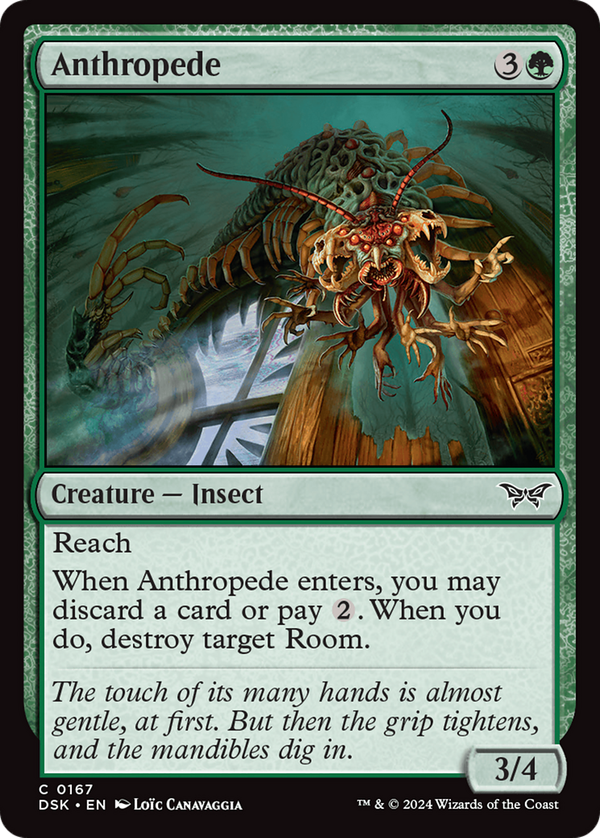
Rules text
 . When you do, destroy target Room.