Animal Boneyard


Putting the sacrifice outlet on a land rather than a creature is the quiet wrinkle here: an Aura attached to permanent, hard-to-kill real estate, which means the engine survives the board wipes that would otherwise sweep away both your fodder and your conversion piece. The lifegain scales off toughness, which inverts the usual aggression of sacrifice effects: you are rewarded for offering up your sturdiest blockers and your defensively-statted walls, not your spent attackers. That makes it a piece for grindy attrition shells that want to bleed an aggressor dry, the kind of deck that views creatures as renewable life-batteries rather than threats. The repeatable tap-and-sacrifice clause also asks a real cost beyond the creature itself: the land is tapped down, so each conversion competes with the mana you would otherwise spend that turn. It is a slow drip, not a burst, and it expects you to have the fodder to keep feeding it. The design lives entirely in the gap between what white usually does with creatures (protect them, gain incidental life from their entry) and what black does (sacrifice them for value); this is white borrowing the outlet but bending it toward defense, paying out toughness instead of power so the reward tracks survivability rather than damage.
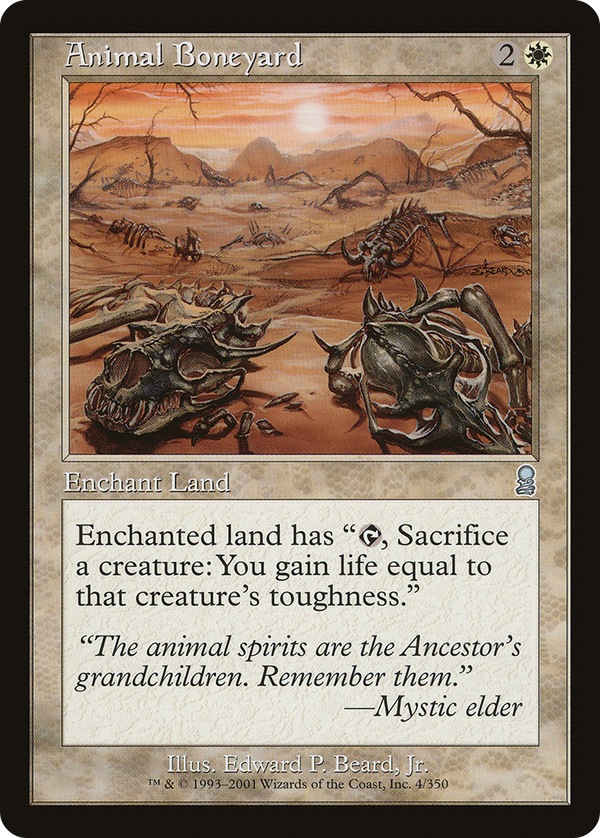
Rules text
 , Sacrifice a creature: You gain life equal to the sacrificed creature's toughness."