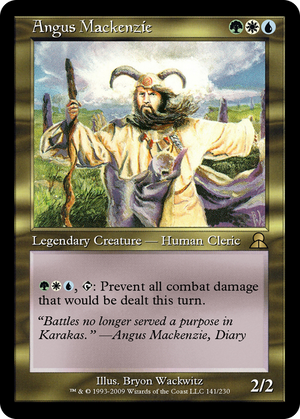
Angus Mackenzie



The fog-on-a-stick design, given a body and a repeatable engine. Where the green instant Fog does its work once and goes to the graveyard, this Cleric does the same job on a tap ability that recurs every turn: untap, pay three colors, prevent. The triple-color gate is what keeps the loop honest, and the timing clause is sharper than it first reads. "Activate only before the combat damage step" does not push the ability to sorcery speed; it leaves it fully live at instant speed during combat. You can hold up the tap and fire it in response to attackers or blockers, reacting to what your opponent has committed before the swing resolves. What it cannot do is undo damage already dealt: the window closes the moment the combat damage step begins. You stop the punch in the air, not after it lands. What grew up around the card was the original pillowfort archetype: ramp into recursion, win through mill or some alternate condition, the prototype for every "the game will not end on combat damage" strategy. Reserved List status keeps the original printing scarce, but the influence is everywhere; every time Wizards prints a permanent whose tap ability rewrites a phase of the turn, they work in space this opened. The color identity carries its own argument. Bant as a shard (green and its allies white and blue) went uncodified for years, but this card made the case in 1994: green's mana, white's prevention, blue's patience, all asked for in a single activation.
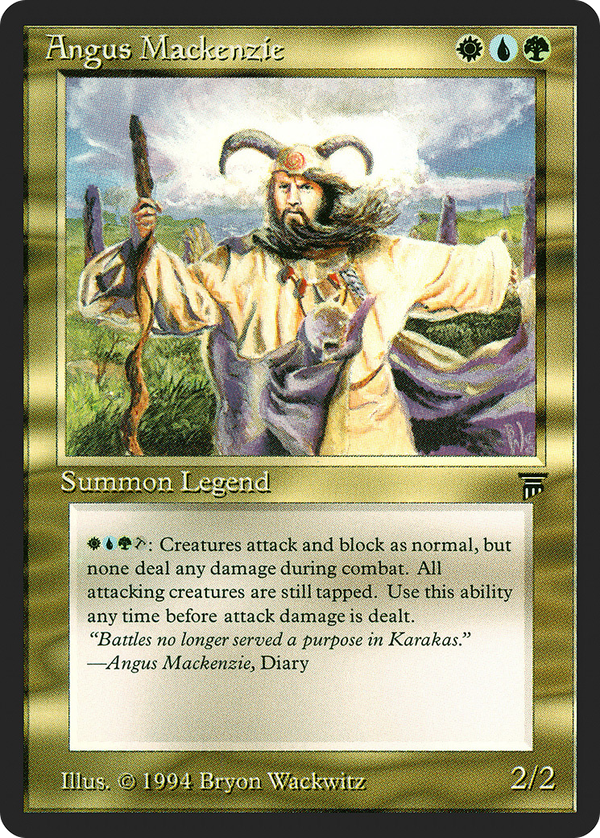
Rules text
,  : Prevent all combat damage that would be dealt this turn. Activate only before the combat damage step.