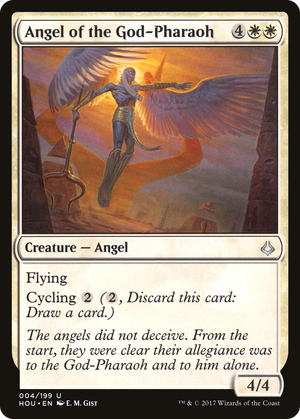
Angel of the God-Pharaoh


The cycling number is where the design lives. A 4/4 flyer for six is a fair midrange body, the kind of card that fills out a curve without bending it; the  cycling cost is what makes the card worth opening. The friction of a six-mana creature is that it sits dead in your hand for most of the game, a brick you cannot deploy when you need action and a topdeck you do not want when you are behind. Cycling answers exactly that problem: when the slow beater is the wrong card for the moment, you pay two and trade it for a live one. This is the discipline of the cycling cycle, where the more expensive and situational the creature, the cheaper its cycling, so the card you would never cast on turn three is the card you happily ditch for two on turn three. The effect is a creature that is never a mulligan-forcing brick, because its floor is a cantrip and its ceiling is an evasive beater. Cycling has done this work since the mechanic first appeared, but pairing it with a clean flying body at the top of the curve is the most legible version of the trade: you are buying optionality, paying for it with a soft body and a fixed rate, and trusting that a fresh card now is often worth more than a 4/4 you cannot yet afford.
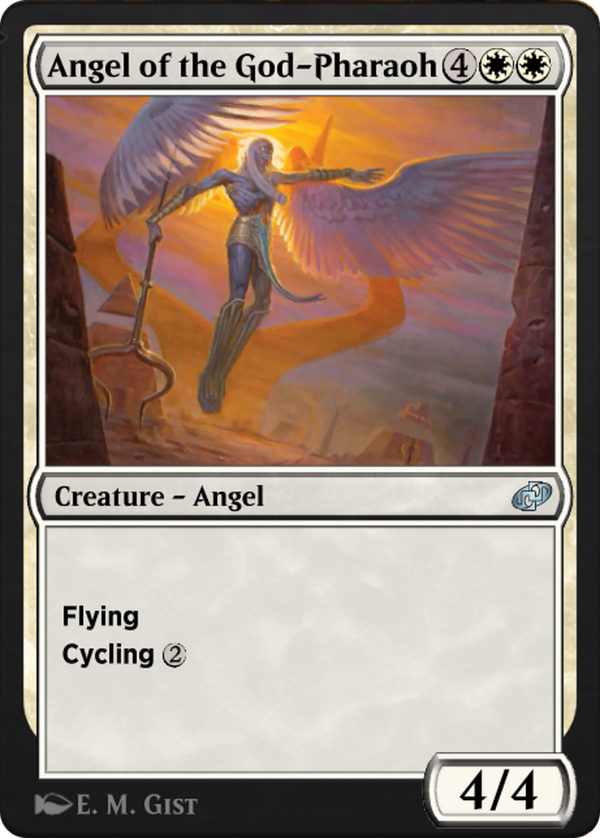
Rules text
(, Discard this card: Draw a card.)