Ancient Spring
Tap it for blue all day, or cash it in once for a white and a black on a single activation: the sacrifice clause is the real design, and the enter-tapped restriction is what pays for it. You spend the land to break it apart, trading a permanent mana source for a one-time burst of off-color fixing, so the card asks a specific question of the deck running it: do you know the exact turn you need one more white and one more black, and can you survive losing a land afterward? The blue baseline keeps it from sitting dead in the meantime; until you crack it, it is a blue source carrying a stored splash. One of five such lands, each tuned to a different three-color combination, this was fixing built for a gold-heavy multicolor era that had not yet been handed the clean dual-land rates that came later. The result reads as transitional technology, clunkier than the painlands or fetches that surround it in eternal formats, but a clean expression of a time still willing to charge a genuine resource cost for color flexibility. The land does not pretend the splash is free; it makes you spend a card's worth of mana to get there, and that honesty about the price is the whole idea.
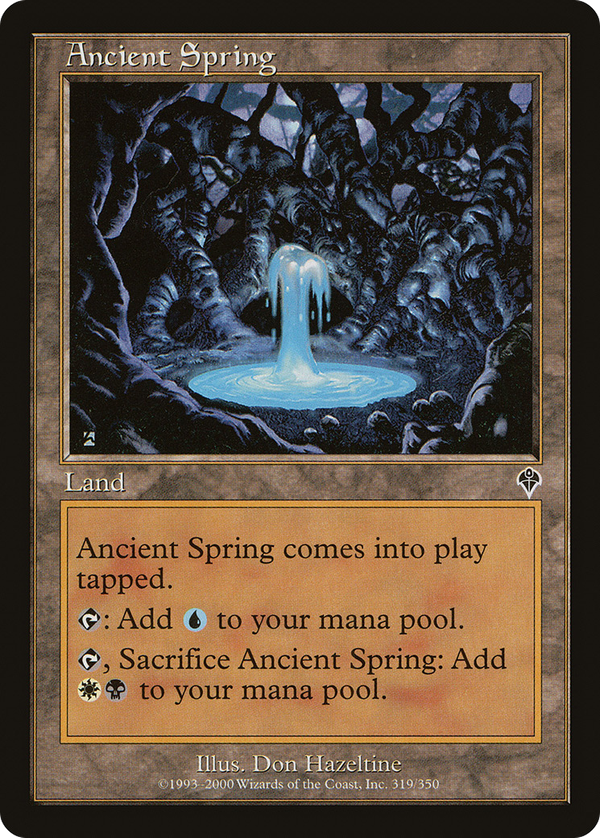
Rules text
 : Add
: Add  .
, Sacrifice this land: Add
.
, Sacrifice this land: Add 
 .
.