Amok


Discard a card at random to inch a single creature forward one counter at a time, paying mana on top: the rate is indefensible, and the randomness is the part that turns it from merely bad to actively hostile. You cannot even choose to ditch your dead cards; the engine decides for you, which means it can strip the spells you wanted while leaving the chaff in hand. What the card documents is a late-90s read on red's color identity, the idea that recklessness should be a literal cost rather than a flavor descriptor. Throwing cards away at random to fuel an aggressive board was framed as chaotic abandon, the price red pays for its impatience. The problem is the math underneath the flavor. A repeatable +1/+1 counter is among the weakest effects you can hang an open-ended cost on, and "discard a card at random" is one of the steepest recurring costs the game has ever asked for; stacking the two produces an activation that drains your hand to barely move the board, with no protection from the counter being removed and no payoff for the cards you lose. The mechanic never developed legs because there was nothing to build toward. It endures as a curiosity from a stretch of design when the line between "feels red" and "feels bad" was still being drawn, and this one came down squarely on the wrong side.
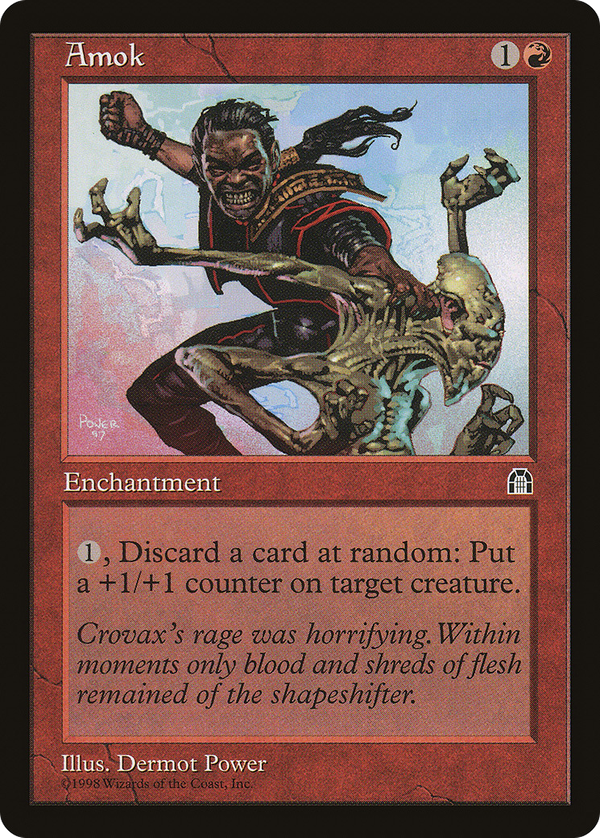
Rules text
, Discard a card at random: Put a +1/+1 counter on target creature.