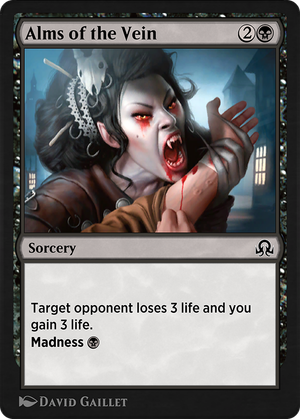
Alms of the Vein


Three life each direction is a marginal drain that would never see play at full price, and the design knows it: the whole proposition rests on the discount. Cast it the honest way and you have paid three mana for a swing that Bump in the Night handles for a single black at sorcery speed. Discard it instead, pay the lone black its madness clause grants, and the six-point life swing becomes a real spell you cast off a loot, a cycler, or an aggressive hand-dumping curve. That gap between printed cost and madness cost is the entire reason it exists; the card is built to be thrown away rather than held. It belongs to a small family of madness spells priced deliberately high on the face so the alternative cost is always the line you want, converting the cost of discarding into tempo and a free trigger. The discard-to-exile step is the wrinkle worth understanding: a madness card leaves your hand into exile rather than the graveyard, and only reaches the bin afterward (off the stack once it resolves as a sorcery, or directly from exile if you decline to cast it). That detour means the card is never a discard target a graveyard engine can immediately recur, since it bypasses the yard at the moment of discard. As life-swing math it is unremarkable; as a study in pricing a card to reward what you were going to do anyway, it is a tidy engine part for any deck that treats its own hand as fuel.
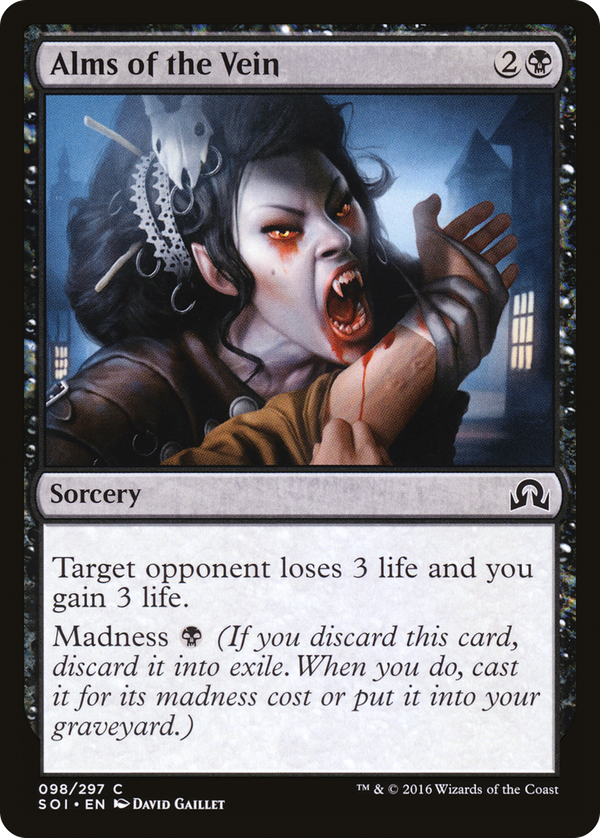
Rules text
(If you discard this card, discard it into exile. When you do, cast it for its madness cost or put it into your graveyard.)