Alliance of Arms

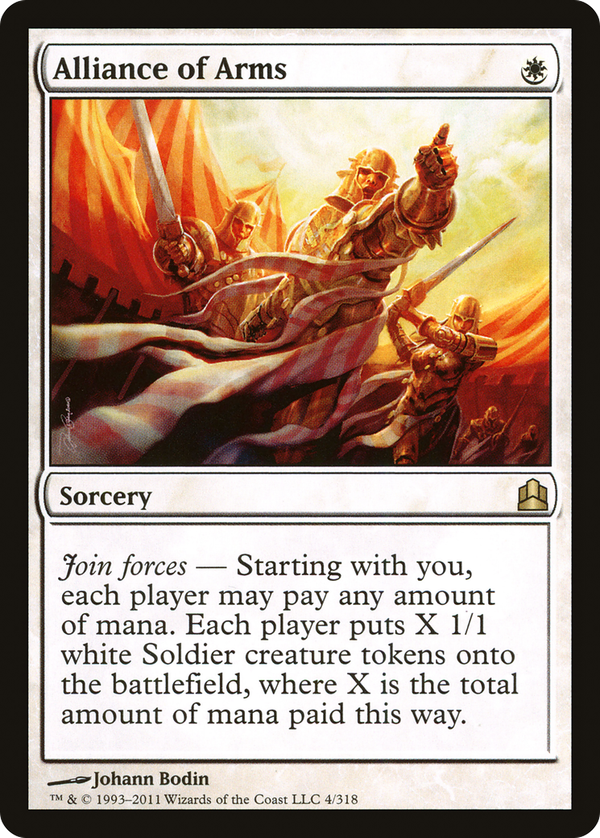
Join forces turned a group-hug premise into a soldier factory, and the political math is the entire point: the total payment comes from the whole table, and so does the payoff. Each player makes a number of tokens equal to the total mana everyone paid, so a player who contributes nothing still gets the full army. That symmetry is what keeps a one-mana sorcery from being a runaway engine in multiplayer: the more you front to inflate the count, the more identical soldiers you hand to every opponent. Where most ramp-and-tokens designs ask one player to commit mana for a private payoff, this asks the table to negotiate over a public one, and the player who proposes the spend rarely benefits most. The play pattern it creates is closer to an auction than a card: you cast it to break a stall, to fuel a sacrifice payoff or a mass-pump finisher you alone can exploit, or to bluff a threat the table fears more than it should. In a duel it collapses to a symmetrical race where any mana either player adds arms both sides equally, which is precisely why join forces only ever appeared on multiplayer-facing cards. The soldier tokens are deliberately generic, white's most reprintable body, fodder any anthem or aristocrat shell can repurpose; the interesting variable is never the tokens but how much mana the people you are fighting decide to add to a pile that grows everyone's board at once.