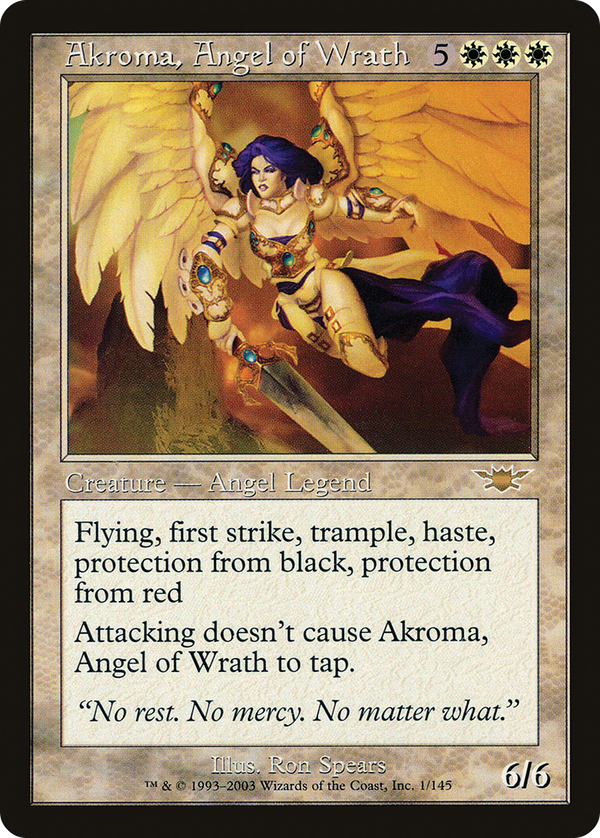
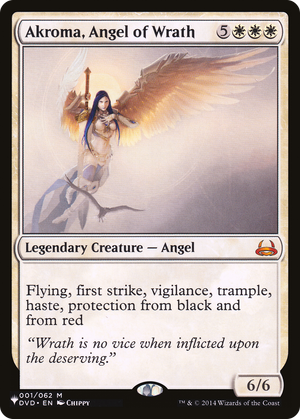
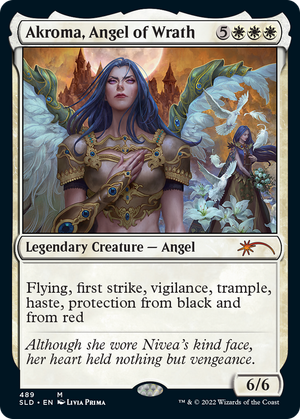
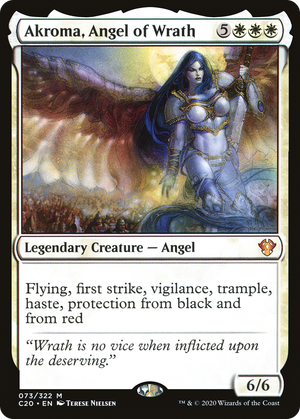
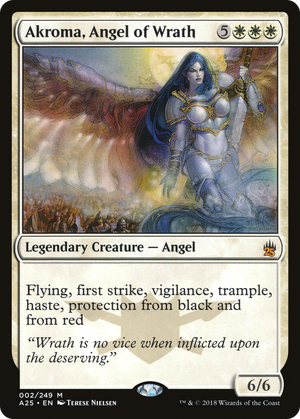
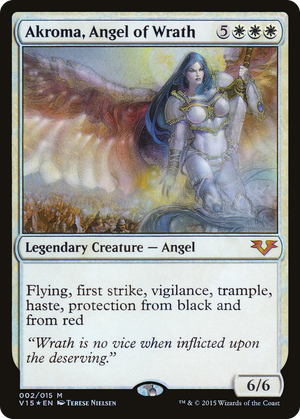
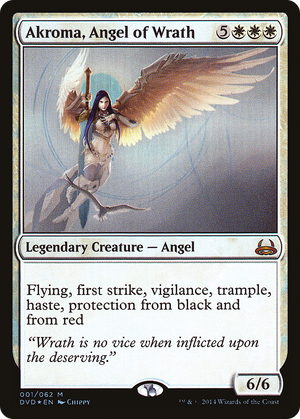
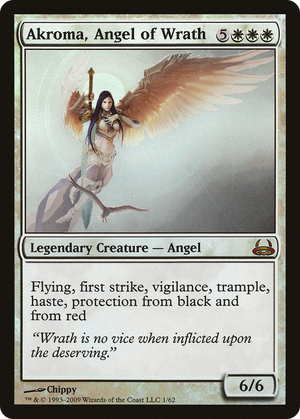
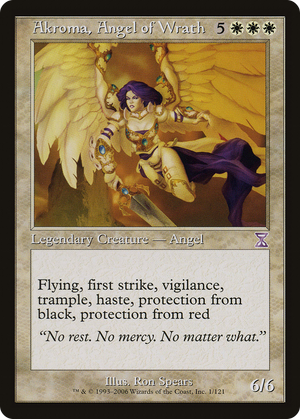
Akroma, Angel of Wrath


Six keywords stacked on one body was a maximalist statement: this is what a top-end angel should look like, declared without compromise. Flying, vigilance, first strike, trample, and haste each pulls its own weight (the creature swings the turn it lands, holds the fort without losing tempo, and wins any combat it enters), but the protection from black and from red is the choice that gives the card its character. Those were the era's two great removal colors: red's burn that scaled past six toughness, and black's wealth of targeted destruction. Protection from both shut down the spells aimed directly at the creature, which is where most of black and red's interaction lived. The 6/6 carries the keywords, but the keywords are what turn it into a clock that demands a specific kind of answer (white or blue sweepers, bounce, an edict to dodge the protection by hitting the controller instead, or a blocker that survives first strike) rather than the cheap point removal most decks lean on. The eight mana is the price of all of it, and the design pays it bluntly: lay out the cost, get a creature that ends games unless the opponent has prepared the narrow class of answers that still works. It became a reanimation and cheat-it-into-play staple precisely because the printed cost was meant to be skipped, and the payoff was tuned to be worth the trouble of skipping it.