Airbending Lesson


Airbend inverts the arithmetic of tempo removal, and the inversion is the whole design problem to solve. Classic bounce like Unsummon or Boomerang sends a permanent to hand, where the owner recasts it at full price and you've rented a turn against its actual cost. This keyword exiles the permanent and hands the owner a flat recast instead, which means the mana discount you're granting scales with what you exile. Against a two-drop the recast still costs , so you've barely changed their outlay; point it at a six-mana bomb and you've let them replay it for , a discount no traditional bounce would ever concede. That is the tension: the more expensive the target, the more you're subsidizing its return, so the exile mode wants to be aimed at small, cheap permanents where the flat isn't a favor. What keeps the spell from ever being a liability is the cantrip stapled to the back. It draws a card, so the exchange replaces itself no matter what: worst case you've cleared a nonland permanent for a turn at instant speed and refilled your hand. That guaranteed replacement is the real separator from the plain bounce spells it descends from. Unlike Path to Exile, which trades the creature away permanently at the cost of a land, this never closes the book: the exiled permanent hovers over the game with its discount attached, always one payment from coming back.
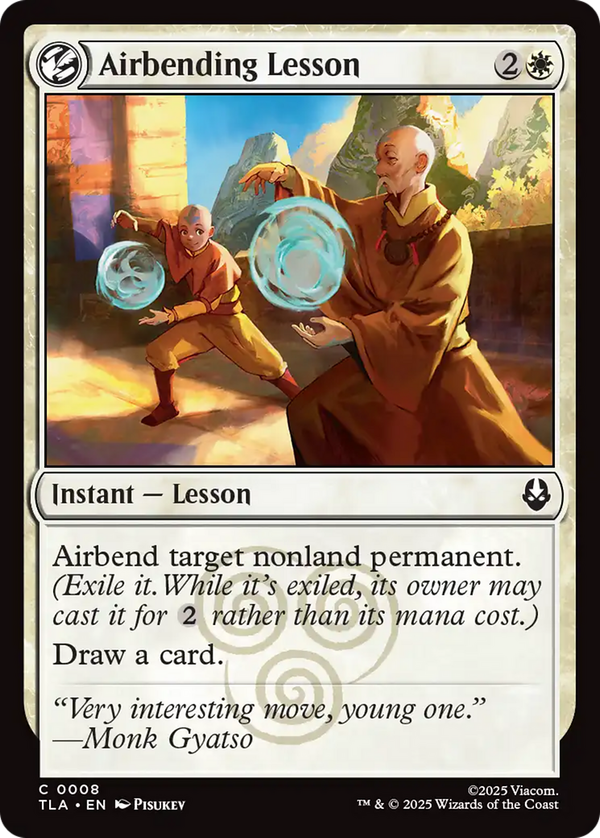
Rules text
rather than its mana cost.)
Draw a card.