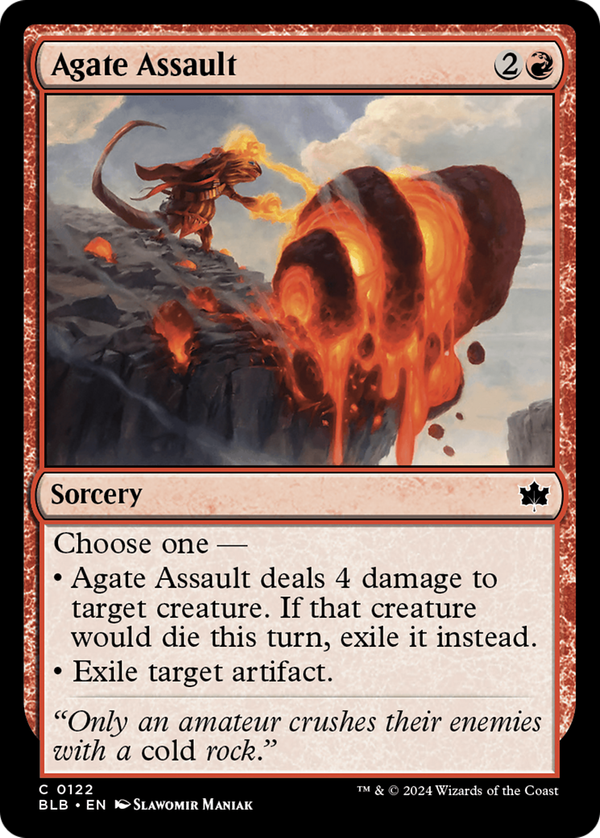
Agate Assault


The exile clause on the first mode is doing quiet but real work. Four damage kills most creatures outright, so why bother writing "if it would die, exile it instead"? Because that clause converts a burn spell into an answer for the things that punish plain damage: recursive threats, death-triggered value engines, and anything that would rather sit in a graveyard than leave the game entirely. The mode taxes itself by locking the exile in only when the creature dies this turn, so a body big enough to survive four damage shrugs off both the kill and the exile. The second mode is the flexibility premium: clean artifact removal, exile again rather than destruction, stapled onto a spell you were happy to run for the first mode anyway. That pairing is the whole pitch. Each half in isolation is a rate you might pass on; together they let one card cover creatures and artifacts alike, with the decision deferred to the moment of casting rather than committed at deckbuilding. When the opposing board offers a legal target for either half, the spell is live; the point is that it is far less likely to be dead than a mode-locked answer. The design sits in the long line of red removal that trades raw efficiency for coverage: a competent answer to two problems instead of a great answer to one, choosing breadth over rate.