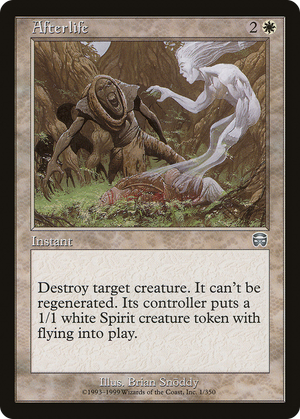
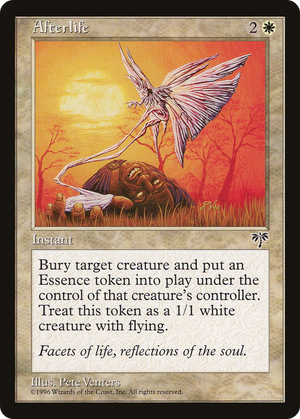
Afterlife


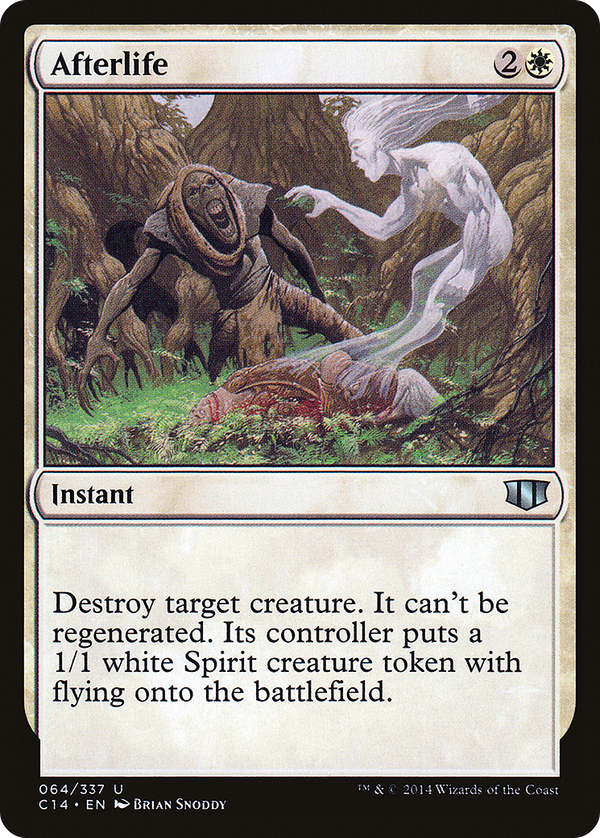
Unconditional, regeneration-proof removal at instant speed was a premium effect in this era, and the design pays for that power with an unusual currency: it gives the victim a 1/1 white flier in exchange. That replacement token is the friction valve. Rather than restrict what the spell can target, the design hands a small body back to the opponent so the trade never reads as a clean blowout. You are paying to convert whatever you destroy into a single flying chump-blocker on the other side, plus a future sacrifice morsel. The flavor logic is tight (the slain creature lingers as a spirit), and the mechanical logic mirrors it: kill the threat, deny it the regeneration shield, then top the table back up with a consolation body. Against a lone fat threat the deal is excellent, since a 1/1 flier replaces almost nothing of value. Against a board built to go wide, the math curdles, because every spirit minted is another attacker or another body an aristocrats engine can cash in. The same spell reading as a bargain or a liability depending on the board state it lands into shows how early design softened unconditional kill spells with give-and-take, before color-pie restrictions on what each color could destroy took over that balancing work instead.