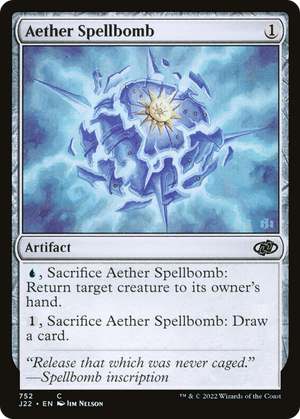
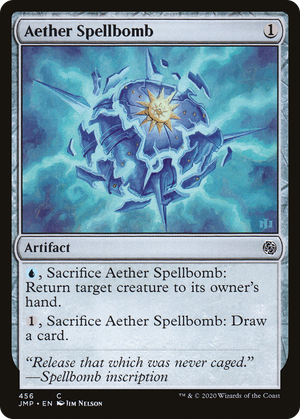
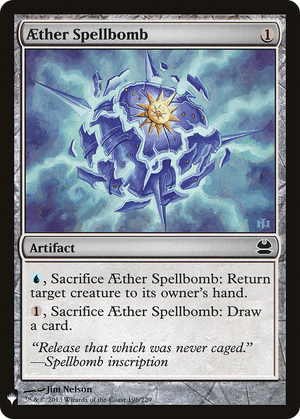
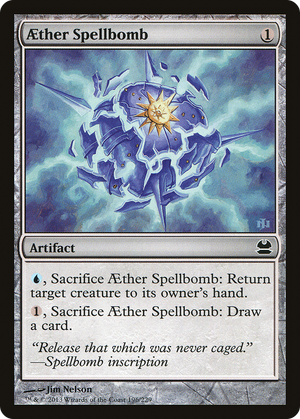
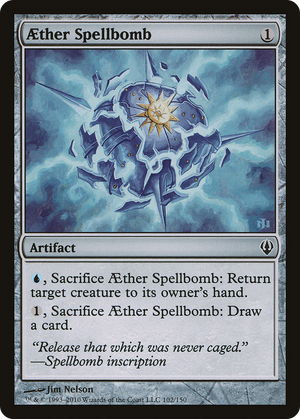
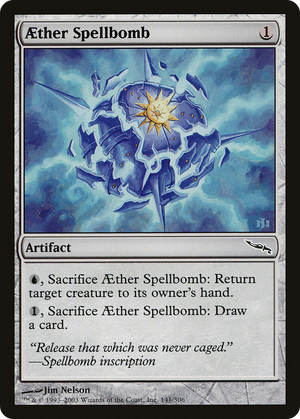
Aether Spellbomb

The Spellbomb cycle's design trick is the floor: each one can sacrifice itself for a card, so the worst case is a one-mana artifact that cantrips on its way out. This is the most flexible of the five, and the reason is the bounce. The blue activation returns any creature to hand, a one-shot tempo swing whose timing belongs entirely to you because the artifact is already sitting in play, waiting. You can crack it in response to an attack, to save a creature of your own from a removal spell, or to re-buy an enters-the-battlefield trigger you want to fire again. The point is never having to decide in advance. If the game never offers a target worth resetting, the second mode draws a card instead and the slot was never spent. That refusal to become a dead draw is what carried it across eras: any deck running artifacts for a reason can include it as a cheap self-replacing piece, with the bounce as free optionality stacked on top. The "no card disadvantage" instinct shows up here cleanly, predating much of the explicit "draw a card when this dies" templating that followed. The cost is modest power: the bounce is single-use, the cantrip costs mana, and the artifact does nothing while it sits there. You pay a tempo tax for the privilege of never drawing a blank.
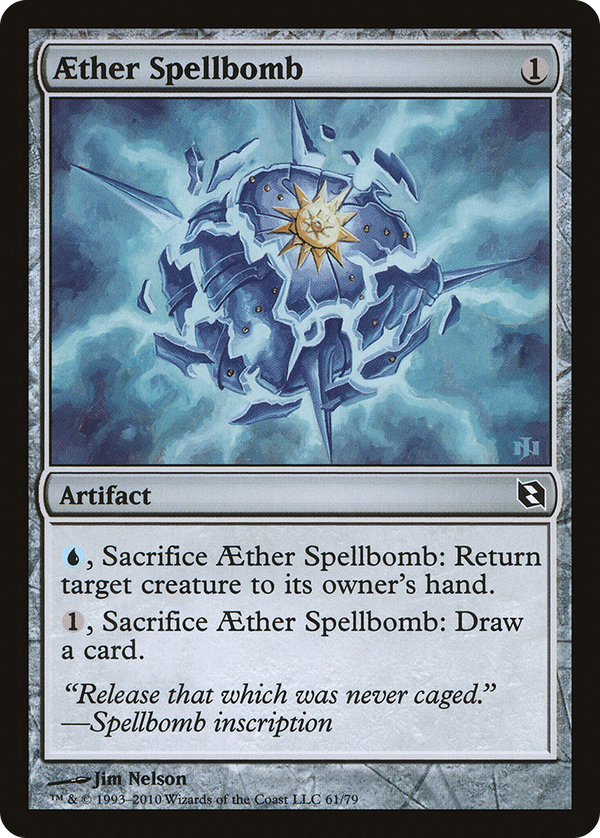
Rules text
 , Sacrifice this artifact: Return target creature to its owner's hand.
, Sacrifice this artifact: Draw a card.
, Sacrifice this artifact: Return target creature to its owner's hand.
, Sacrifice this artifact: Draw a card.