Aegis Sculptor


The upkeep clause is what separates this from the generic evasive body it starts as: a 2/3 flier that turns a full graveyard into a slow, self-sufficient clock. Ward  is the piece that makes that plan viable, because a creature you intend to grow across several turns is exactly the creature opponents want to kill on the cheap, and the tax buys the extra turns the +1/+1 counters need to matter. The engine is deliberately taxed on your own side too: each counter costs two cards exiled from your graveyard, so the growth is metered by how much you can afford to spend and how full the yard is. That pins the card to a specific kind of blue deck, one that fills its graveyard as a byproduct of doing other things (card selection, cheap spells, self-mill) and can spare the fuel without kneecapping a recursion plan. The growth is automatic but capped: one counter per upkeep, resolving on its own before the main phase, never a burst. What you get in return is a threat that keeps improving without committing more mana or more cards from hand, protected against the removal that would otherwise make a multi-turn growth plan a liability. It is a patient design, built for a deck that treats its graveyard as a resource pool rather than a place cards go to die.
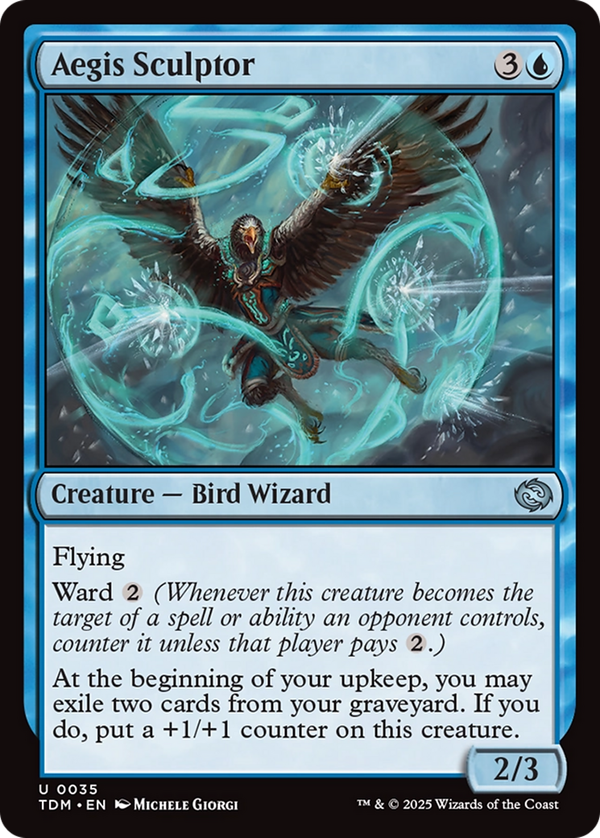
Rules text
(Whenever this creature becomes the target of a spell or ability an opponent controls, counter it unless that player pays .)
At the beginning of your upkeep, you may exile two cards from your graveyard. If you do, put a +1/+1 counter on this creature.