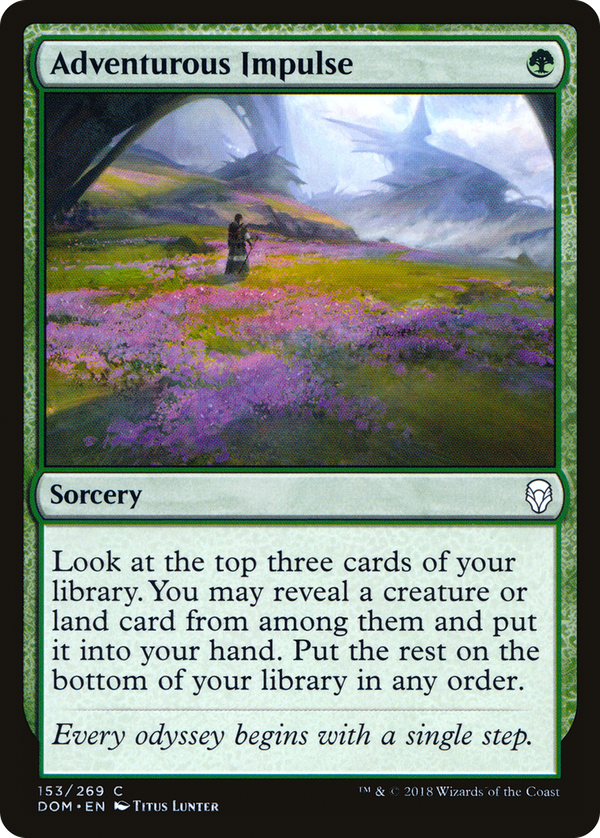
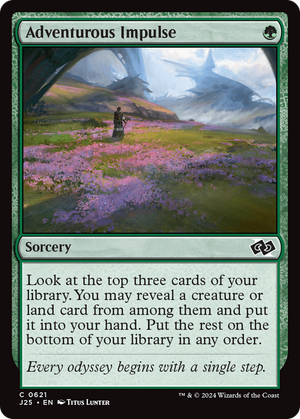
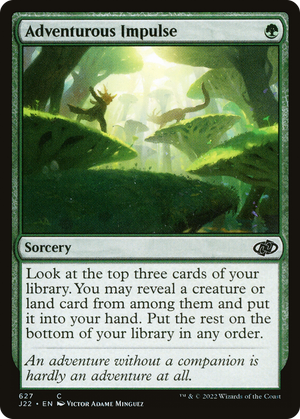
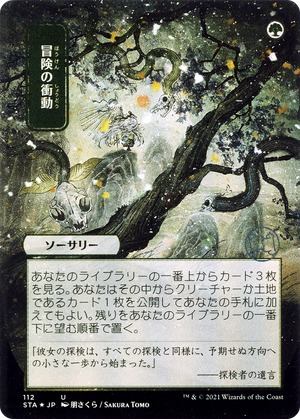
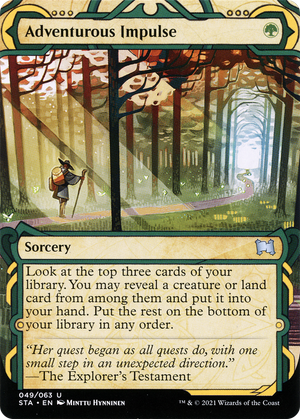
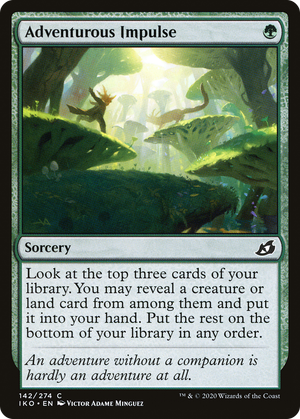
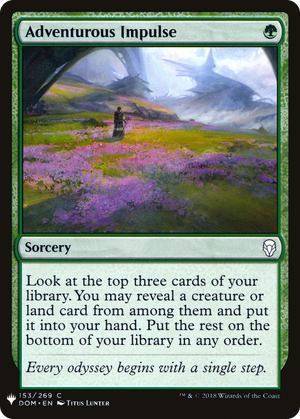
Adventurous Impulse

The selectivity here is the entire trade. One green mana digs three deep and hands you a creature or a land while sweeping the dregs to the bottom, which is exactly the filter a deck that runs almost nothing else wants. Older one-mana green cantrips paid for their card by being unconditional draws or by demanding a heavier deckbuilding tax; this one inverts that, pricing the spell cheaply precisely because it can only ever find two card categories. The restriction is the point. In a deck built on cheap threats and the lands to cast them, "creature or land" describes nearly the entire library, so the conditional reads as functionally unconditional while still failing to find a removal spell or a payoff when you need one. The bottom-of-library clause matters more than it looks: the two cards you decline are not just discarded but buried, smoothing your next several draws toward the spells that actually do something. It does no card advantage; you trade one for one. What it sells is consistency, the quiet currency of any deck trying to assemble the same three-card sequence game after game. That makes it less a tool for grindy midrange and more a reliability engine for the linear strategies that would rather hit their curve than win the long game.