Act on Impulse


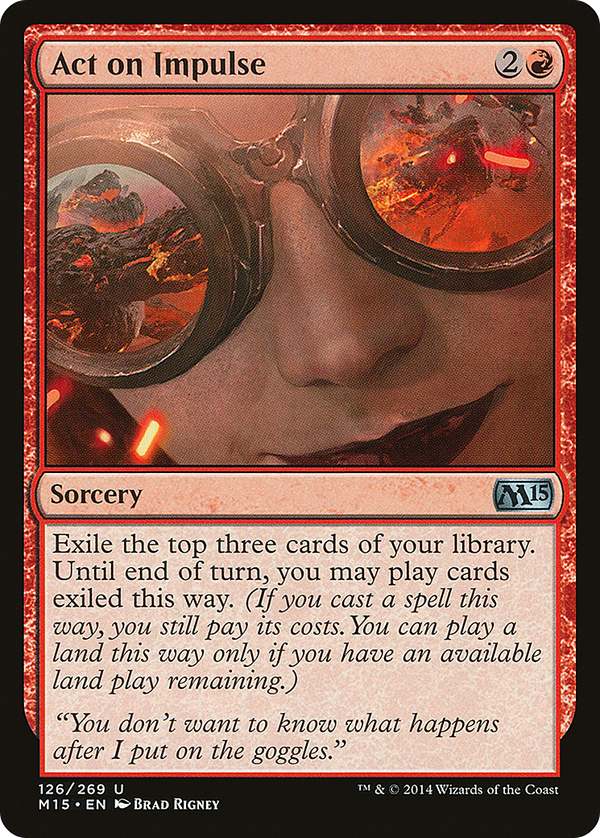
Red doesn't draw cards; it steals them, and this is a clean expression of how that bargain works. Three cards leave your library and become playable this turn only, which means the card advantage is real but rented: anything you cannot cast or play before end of turn is gone for good. That temporary window is the price the effect pays for its rate. A flat draw spell adds those cards to your hand to keep; this one only lends them, so you are not buying card advantage so much as a single turn's worth of access, which rewards low curves and empty hands and punishes greed. The design lineage runs through every red impulse-draw effect since: temporary reach into the top of the deck, paid for with the threat of waste. It also sidesteps the discard penalty that hellbent-adjacent designs lean on, since cards exiled and unplayed never touched your hand to begin with. The land clause matters too: you can drop a land off the top, but only if you have not made your land play, which folds the effect into a turn's normal sequencing rather than breaking it open. The whole thing is a study in red's color-pie compromise: it gets to dig deep and find gas, but it has to spend that gas immediately or watch it burn.