Acquire


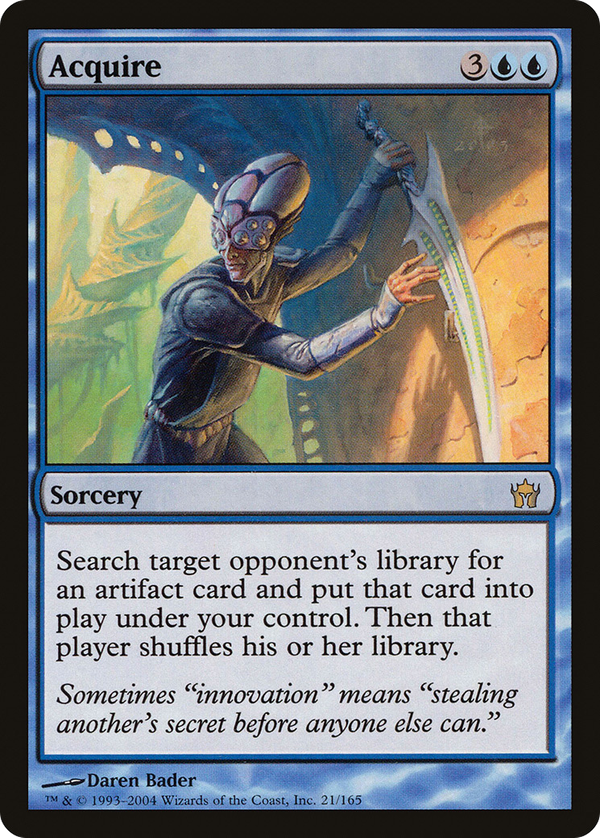
Theft as deckbuilding bet. Most steal effects target the board: take a creature, borrow a permanent, hand it back at end of turn. This one reaches into the library instead, which means it only matters if the opponent is running artifacts worth stealing, and it gives you the pick of their best one onto the battlefield permanently. That conditionality is the whole transaction: facing a deck without artifacts, it is a dead five-mana sorcery, and facing an artifact-dense one, it is a single-card swing that strips a key piece and installs it on your side. Searching their library hands you a second prize the card rarely gets credit for: you read their entire deck on the way to grabbing the artifact, so even the resolution scouts the matchup. Forcing the shuffle afterward is the tax that keeps the steal honest, scrambling whatever sequencing the opponent had lined up before you tore the artifact out of it. Strategically it sits with the color-hosers and graveyard hate: cards that do nothing in a vacuum and swing games against the one archetype they target, punishing a specific plan rather than answering the board. The design tension is plain: the more powerful the artifacts in a format, and the more degenerate the single piece it can yank, the more this functions as a blade aimed at exactly one kind of opponent.