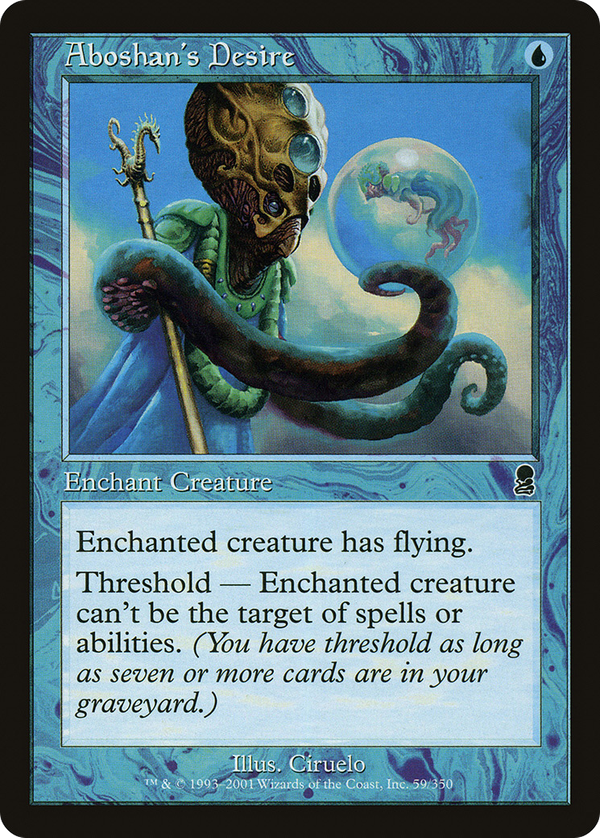
Aboshan's Desire

Evasion auras carry an ugly liability: spend a card to grant flying, and the opponent's next point of targeted removal collects two of yours for one. This Aura's threshold clause rewrites that exchange once your graveyard crosses seven cards, draping the enchanted creature in shroud and pulling it out of the opposing targeted-removal pool entirely. That is the precise tension the threshold mechanic was built to absorb: the early-game ask is to invest a fragile, cantrip-less Aura with all the card disadvantage that implies, and the late-game payoff is an attacker that targeted answers can't touch. A flying clock and a protection package compressed into the cheapest mana cost the game offers, gated behind the kind of graveyard accrual a self-mill shell produces anyway. Pair it with a recursive threat or a mill payoff and you get an evasive body that sits outside the opponent's hand. The cost is real and symmetrical: shroud locks you out too, so once it switches on you cannot re-suit the creature with a pump spell or combat trick, and the card has already been committed. What makes the design memorable is the inversion at its heart, converting an Aura's structural weakness (down a card the instant the creature dies) into a reward for doing graveyard work the player was already incentivized toward.