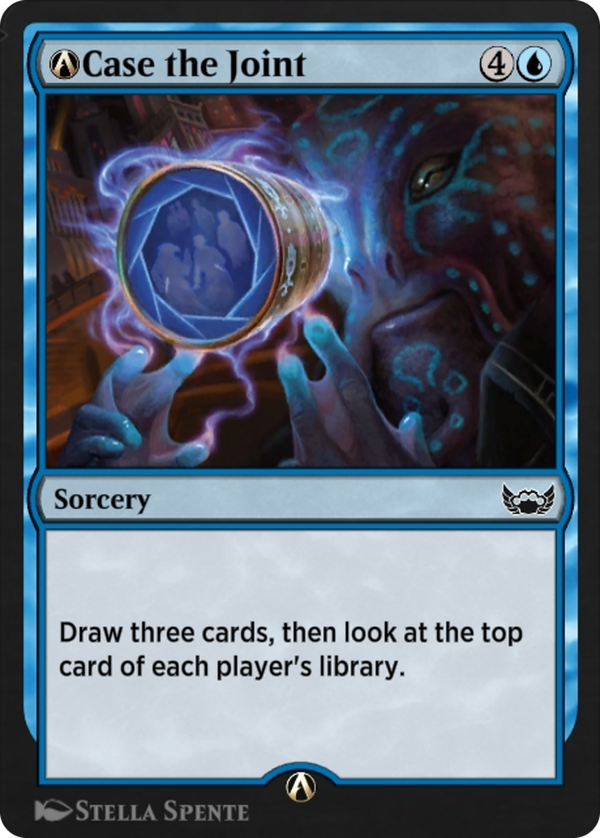
A-Case the Joint


The "A-" prefix marks this as an Alchemy rebalance, and the interesting thing is how conservative the change is. The rider is intact: after drawing three, you still peek at the top card of every player's library, your own included. That clause is private information, not a public reveal, which makes it quieter than it first sounds. For you it offers a small planning edge on your next draw and a read on what your opponents are about to see, the kind of texture that occasionally matters in a multiplayer game and rarely bends a duel. The rebalance keeps it because the effect was never the problem; the card's job is refilling a hand, and the scry-adjacent look is a low-cost sweetener attached to a straightforward draw spell. As a draw effect the rate is deliberately unexciting: five mana for three cards is a floor, the kind of card-advantage engine a control shell reaches for when nothing cheaper is on the table, not one a deck is built around. What the digital version demonstrates is a designer choosing legibility over reinvention, leaving the effect close enough to its paper self that the two read as the same card, and adjusting the numbers around it rather than the text. The information rider survives because it was already the least demanding part of a card whose whole identity is drawing three and moving on.